

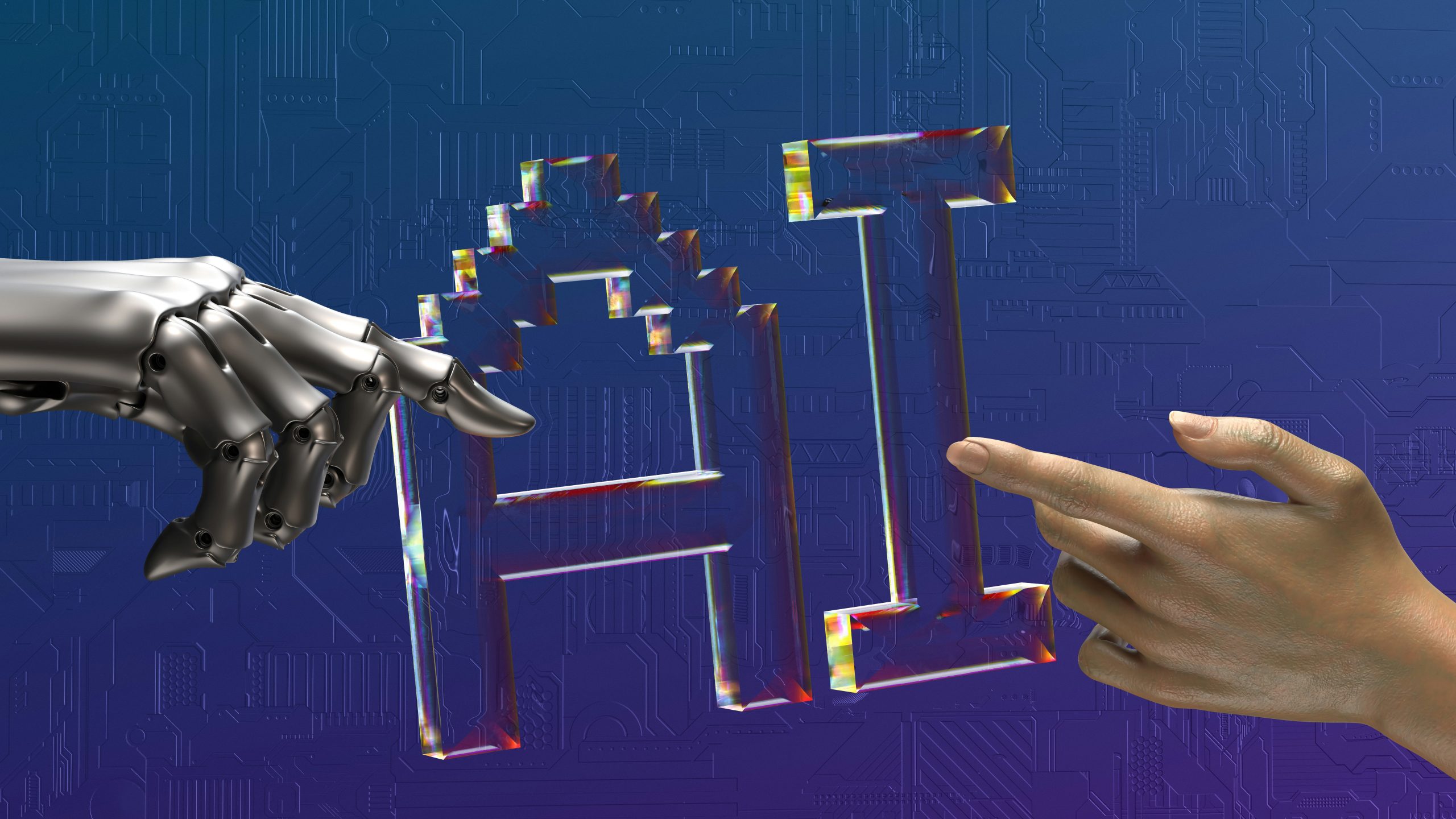
Artificial intelligence is transforming sales faster than any previous wave of technology.
From prospecting to forecasting, AI tools now influence every stage of the sales cycle, analysing data, generating content, and automating repetitive admin. For many organisations, these tools have unlocked new levels of efficiency and insight.
But there’s a risk hidden in the rush to automate: that we lose sight of what sales has always been about: human connection.
The future of sales won’t be AI versus human. It will be AI and human: technology amplifying the uniquely human capabilities that drive trust, empathy, and adaptability.
This is the new frontier for sales teams, learning to integrate automation without eroding authenticity.
The state of AI in sales today
AI has already moved from theory to practice. Predictive analytics, conversation intelligence, and generative content tools are now part of everyday sales operations.
According to McKinsey, generative AI could unlock between $0.8–1.2 trillion in annual productivity across sales and marketing. Whilst Bain & Company reports that sellers currently spend only 25% of their time actively selling, and AI could double that by automating non-value-add tasks. And Gartner predicts that by 2027, 95% of seller research workflows will begin with AI, compared to less than 20% today.
These tools are freeing up time and improving precision, helping teams qualify leads faster, forecast more accurately, and deliver personalised outreach at scale. Yet technology alone doesn’t guarantee better results.
True impact depends on how humans interpret and apply what AI provides. Data can inform; only people can inspire.
What AI excels at, and why it matters
There’s no question that AI makes sales smarter and faster. It can handle the heavy lifting of data entry, scheduling, and forecasting; it can analyse patterns in behaviour and sentiment across thousands of accounts; and it can even draft tailored emails and proposals in seconds.
Harvard Business Review notes that generative AI is already transforming prospecting and coaching, giving salespeople more time for the conversations that count.
But efficiency is only one side of the equation. AI can predict what’s likely to happen, it can’t always explain why. It can recommend actions, but it can’t sense hesitation, or know when a moment of silence builds trust more effectively than another message.
AI accelerates the process but humans define the purpose.
What AI can’t replace
For all its power, AI can’t replicate the essence of selling, the human capacity for connection, intuition, and judgement.
It can process information, but it can’t truly understand people. It can generate language, but it doesn’t know when to pause, listen, or empathise.
As Corporate Visions observes, empathy, curiosity, and adaptability still win deals because “people don’t buy logic, they buy confidence.”
Sales often lives in the grey areas, in tone, timing, and emotional undercurrents that data can’t capture. The best sellers can read a client’s mood, navigate discomfort, and build trust when things get uncertain.
AI will continue to advance, but it will never replace the feeling of being understood by another human being. That’s what earns loyalty, and that’s what still closes deals.
The human advantage: why soft skills are the new hard skills
As automation expands, human skills are becoming the new currency of sales performance.
Forbes points out that AI is making soft skills more valuable, not less. Emotional intelligence, adaptability, and creativity are now the capabilities that make technology meaningful.
Empathy allows salespeople to interpret what a client is really saying. Adaptability helps them adjust when strategies or markets shift. Creativity turns raw data into insight and stories that resonate. And critical thinking ensures that humans don’t just repeat what the model predicts, they challenge, refine, and improve it.
At The Win Academy, we call this the human advantage: combining intellect with emotional awareness to create long-term, trust-based performance. As AI becomes more integrated, those skills aren’t being replaced, they’re becoming the differentiator.
Building the hybrid sales team
The most successful sales organisations aren’t choosing between technology and people, they’re designing systems where both thrive.
In these hybrid teams, AI handles the groundwork: pulling reports, analysing data, drafting proposals. Humans then bring the insight, tone, and context that turn those outputs into outcomes.
The key is clarity of role. Technology should accelerate processes; humans should elevate interaction. That balance allows teams to scale without losing soul.
Forward-thinking leaders are already adapting their management styles to this new reality, coaching AI literacy as a core skill, but pairing it with deliberate development of empathy, listening, and reflection.
The future belongs to those who use automation as an amplifier for authenticity.
Challenges and guardrails
With every innovation comes responsibility.
AI introduces real risks, from bias and error to overreliance and ethical misuse, organisations must prioritise transparency, accountability, and human oversight in their AI use.
Sales teams should always be clear about when AI is used, particularly in client-facing communication. Trust can’t exist without honesty.
Leaders also need to guard against deskilling, ensuring teams continue to develop judgement, intuition, and creative problem-solving even as automation takes over routine tasks. AI should enhance capability, not atrophy it.
Ultimately, ethical use is less about compliance and more about culture: creating an environment where technology serves humanity, not the other way around.
The future of sales leadership
As technology changes the rhythm of sales, leadership itself is evolving.
The next generation of sales leaders will need to orchestrate both systems and people, combining data-driven strategy with emotional intelligence. They’ll need to coach teams not only in how to use AI, but how to think alongside it: questioning assumptions, staying curious, and maintaining a human voice in an increasingly automated world.
Leadership agility, the ability to flex between analytical precision and empathy, will become the defining skill.
The Win Academy’s work with sales leaders centres on this exact challenge: how to create cultures that are future-ready and human-focused. Because the leaders who thrive in the AI era won’t be those who simply adopt tools, they’ll be the ones who elevate people.
The future is human and AI
AI will continue to redefine how sales teams operate, automating, analysing, and accelerating every stage of the process. But no algorithm can replace the trust, intuition, and empathy that sit at the heart of every successful relationship.
The sales organisations that win in the years ahead will use AI to enhance what humans do best. They’ll move faster, think smarter, and connect more deeply, because they’ll understand that technology opens doors, but people build the relationships that last.
The future of sales isn’t about choosing between machine or mind. It’s about bringing both together, creating a partnership where intelligence meets intuition.
At The Win Academy, we help sales organisations build high-performing teams that balance efficiency with human connection. Get in touch to explore how we can help you design hybrid, human-centred sales cultures that thrive in an AI-enabled world.